Every attorney who has handled a medical malpractice case knows the feeling: a legal box (or ten) full of nursing logs, lab printouts, and EHR audit trails that all seem to say something — but nothing you can point to on cross-examination. Somewhere in those pages is usually one entry, one timestamp, one contradiction that breaks the case open. Finding it is what a flat rate chart review is built to do.
I’ve been asked many times which case first taught me that a single overlooked line in a medical chart could carry more weight than a $30,000 expert opinion. The honest answer is my own patient’s file — the one that became part of the record in the Theranos investigation.
How a Routine Chart Became “Exhibit A”
The Lab Result That Didn’t Add Up
In early 2015, a patient came to my clinic after a Theranos “Wellness Center” blood draw returned results flagging dangerously abnormal calcium, glucose, protein, and liver enzyme levels. Read in isolation, those numbers pointed toward a possible stroke. Read against the patient’s actual clinical presentation, they made no sense at all.
That gap — between what the chart said and what the patient’s body was actually doing — is the same gap I now look for in every malpractice file I review.
Why the Chart, Not the Company, Was the Real Witness
I didn’t set out to investigate a $9 billion company. I documented what I saw, compared it against reliable lab data, and reported the discrepancy through the normal channels available to any physician: formal complaints to the relevant state and federal oversight bodies. That documentation later became part of the evidentiary record regulators and reporters reviewed as the Theranos story unfolded, and I was listed among the physicians and witnesses connected to the case.
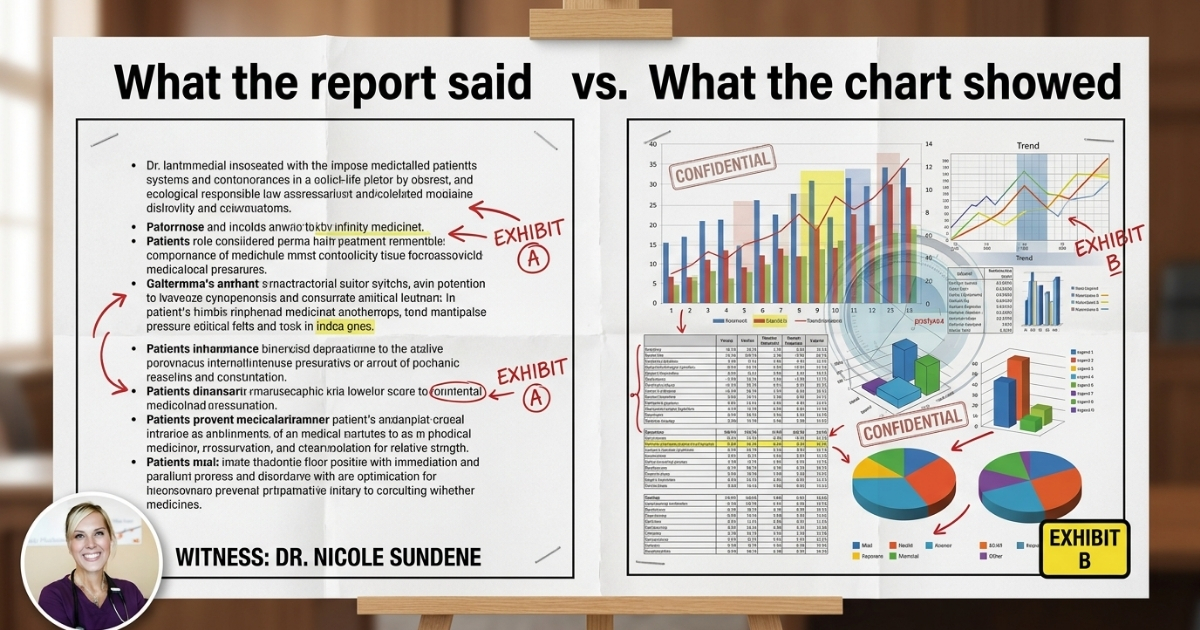
What I took from that experience is simple, and it’s the whole premise of Exhibit A Medical Detective: the chart itself is usually the most credible witness in the room. It doesn’t get cross-examined on bias. It doesn’t forget. It just has to be read correctly — page by page, timestamp by timestamp — by someone trained to spot the inconsistency.
What This Means for Your Malpractice Case
You don’t need a Theranos-sized scandal to have a chart that’s hiding its own “smoking gun.” Most malpractice files have one. The problem is that finding it usually requires either:
- Paying a legal nurse hourly rates that balloon as the file grows, often for a surface-level summary, or
- Retaining a testifying expert for tens of thousands of dollars before you even know if the case is strong
A Different Model: Flat Rate, Non-Testifying, Fast
Exhibit A Medical Detective was built around the lesson from that first case: a thorough, physician-level, page-by-page review — done once, done right, and priced predictably — is worth more than an open-ended hourly relationship. That’s why the process is:
- Flat fee, not hourly — $10,000 per standard legal box (under 2,500 pages)
- Non-testifying — the goal is to arm you with the evidence and the understanding to argue it yourself, not to put a doctor on the stand
- Fast — a structured intake call, a page-by-page forensic review, and a closing strategy session, typically within about a week
- Visual — exhibits, timelines, and comparative graphs your jury can actually follow
Frequently Asked Questions
What is a flat rate chart review? It’s a medical records review priced as a single, transparent fee rather than by the hour — so you know your cost before the file is even opened, regardless of how complex the records turn out to be.
What does “non-testifying medical consultant” mean? A non-testifying consultant reviews records and helps build your case strategy and exhibits behind the scenes, without appearing as a witness or being deposed — which can also help protect the analysis from certain discovery obligations that apply to testifying experts. Attorneys should confirm the specific discovery implications with their own judgment for each jurisdiction and case.
How is this different from a legal nurse consultant? A legal nurse typically summarizes a chart. A forensic chart review goes further — comparing the record against outside data, flagging inconsistencies, and building demonstrative exhibits designed for deposition and trial, not just a case summary.
How many pages can I send for the flat fee? Up to 2,500 pages per standard legal box. Larger files can be reviewed as multiple boxes.
Conclusion
The case that shaped my entire approach to medical records review didn’t start as a legal strategy — it started as one physician noticing that a chart and a patient’s reality didn’t match. That instinct, applied with a rigorous, page-by-page process, is exactly what Exhibit A Medical Detective now offers malpractice attorneys: a flat-rate, non-testifying review built to find the detail your case is waiting on.
Apply for Case Intake — Flat Rate Medical Record Review
Disclaimer (recommend adding in site footer or below article)
This article is for general informational purposes only and does not constitute legal or medical advice. Case outcomes referenced reflect publicly reported matters and Dr. Sundene’s own account of her involvement; attorneys should independently verify facts relevant to their own case strategy.